One of Slovenia’s most beautiful villages is a must-see in spring, when the mighty magnolia blooms behind the walls. In the Karst, we say that local secrets are like water – you can’t just dig them up. Behind its ancient walls, Štanjel Castle has been given a fresh makeover and it also features a wine shop and an interactive exhibition. Along the alleys and on lookout posts, our excellent guides unveil the legends and history of Štanjel.

The strategic location of the village of Štanjel on Turn Hill (364 m) was attractive for settlers early in history. In the Iron Age, a hillfort, featuring a burial ground, was built as part of the settlement network of the Karst. It supervised not only the main roads but also the local ones.
Archaeological research shows that Štanjel played an important role as far back as in pre-historic times as well as in the early and late Roman period. The abundance of traces of material culture bears witness that Štanjel has been inhabited since prehistory.
The narrow, stone medieval alleys that wind among the buildings built on terraces recount ancient stories of this unique Karst settlement. The many art galleries speak volumes about the inspiring character of this place that in the last century also won the heart of the Trieste-born Slovenian painter Lojze Spacal.
Today’s old village was built in the Middle Ages and underwent a significant redesign at the beginning of the 20th century, when the architect Maks Fabiani held the office of mayor. The unique Ferrari Garden, now the best-known part of Fabiani’s legacy in Štanjel, bears witness to his exceptional creativity and innovation.

A visit to Štanjel is a must-do for nearly every Slovenian, as it is part of the nation’s culture. The first reason is the beautiful image of the village perched on top of the hill – postcard perfect! Yet this beautiful image has another magical quality: it awakens the visitor’s curiosity. With every step through the village alleys and with every new story, Štanjel draws you in…
Just climb to the highest points, to Gledanca and the towers, and roam the terraces supported by traditionally built walls, and you will feel Štanjel’s soul and enjoy magnificent views far across the Karst.

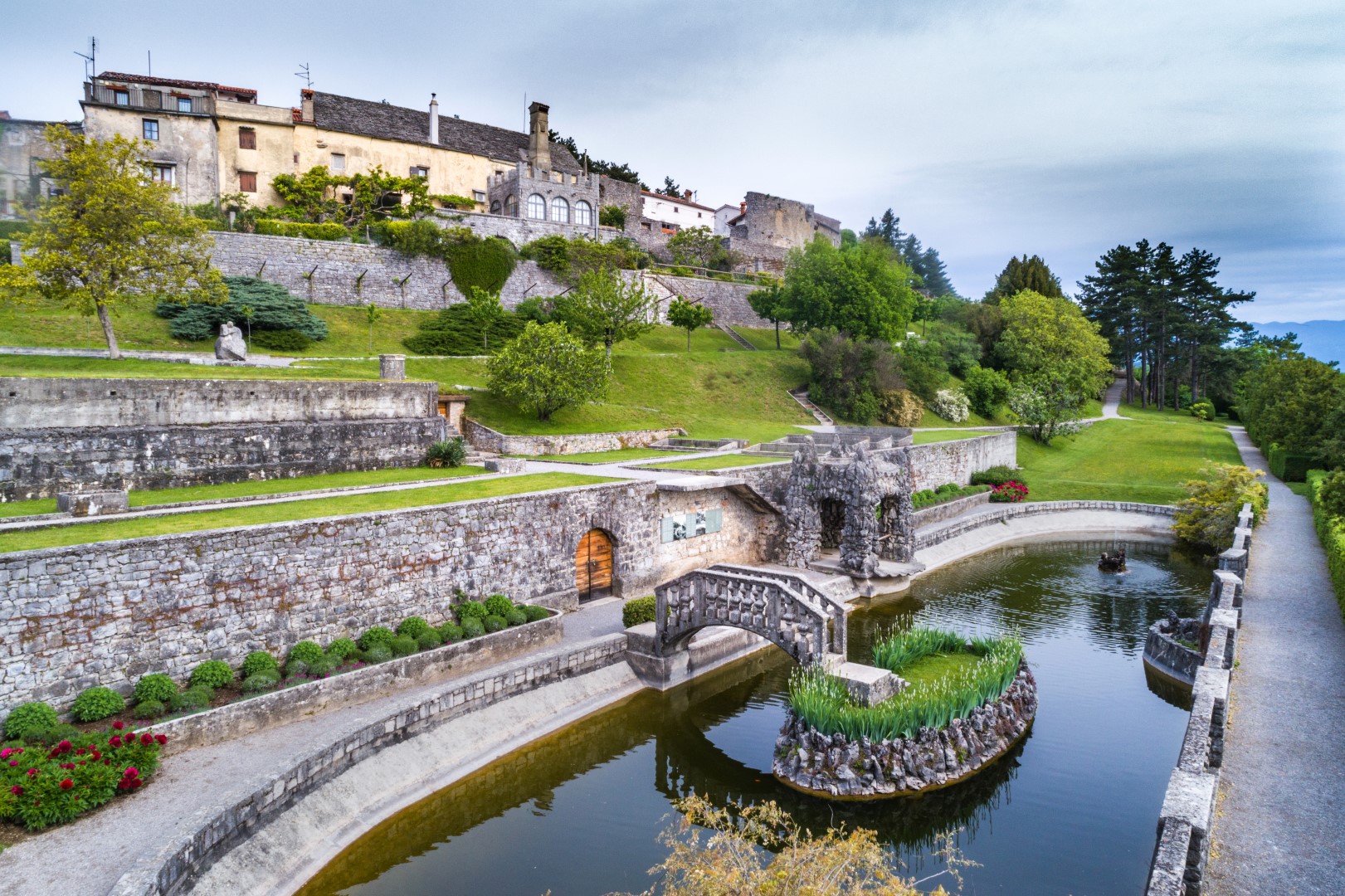
The Ferrari Garden was built in the period between the world wars as part of the Ferrari Villa, owned by the doctor Enrico Ferrari from Trieste. He wanted to build in Štanjel a country villa for himself and a sanatorium for his lung patients.
Maks Fabiani designed the garden on terraces, following the structure of the old village. Some terraces featured gardens, lush with vegetables and flowers, while trees were mainly of Mediterranean species.
Fabiani’s building design was based on the position and shape of the terrain. The architect applied traditional stone support walls and stairways that are typical of the karst landscape and also elements that have nothing to do with the Karst but reflect the ideals of that time. The outlook pavilion, the fountains, the artificial cave… were thus created. Yet the most recognisable part of the garden is the oval pond, featuring a small islet, into which water flowed from a complex water supply system.
Today, the Ferrari Garden is a cultural monument of a national importance. Its uniqueness makes it the perfect venue for many events.
The architect’s unparalleled masterpiece is most beautifully presented during the “The Ferrari Garden - a family portrait” or “Fabiani’s Štanjel” guided tour in "Black cat " treasure hunt in Štanjel.
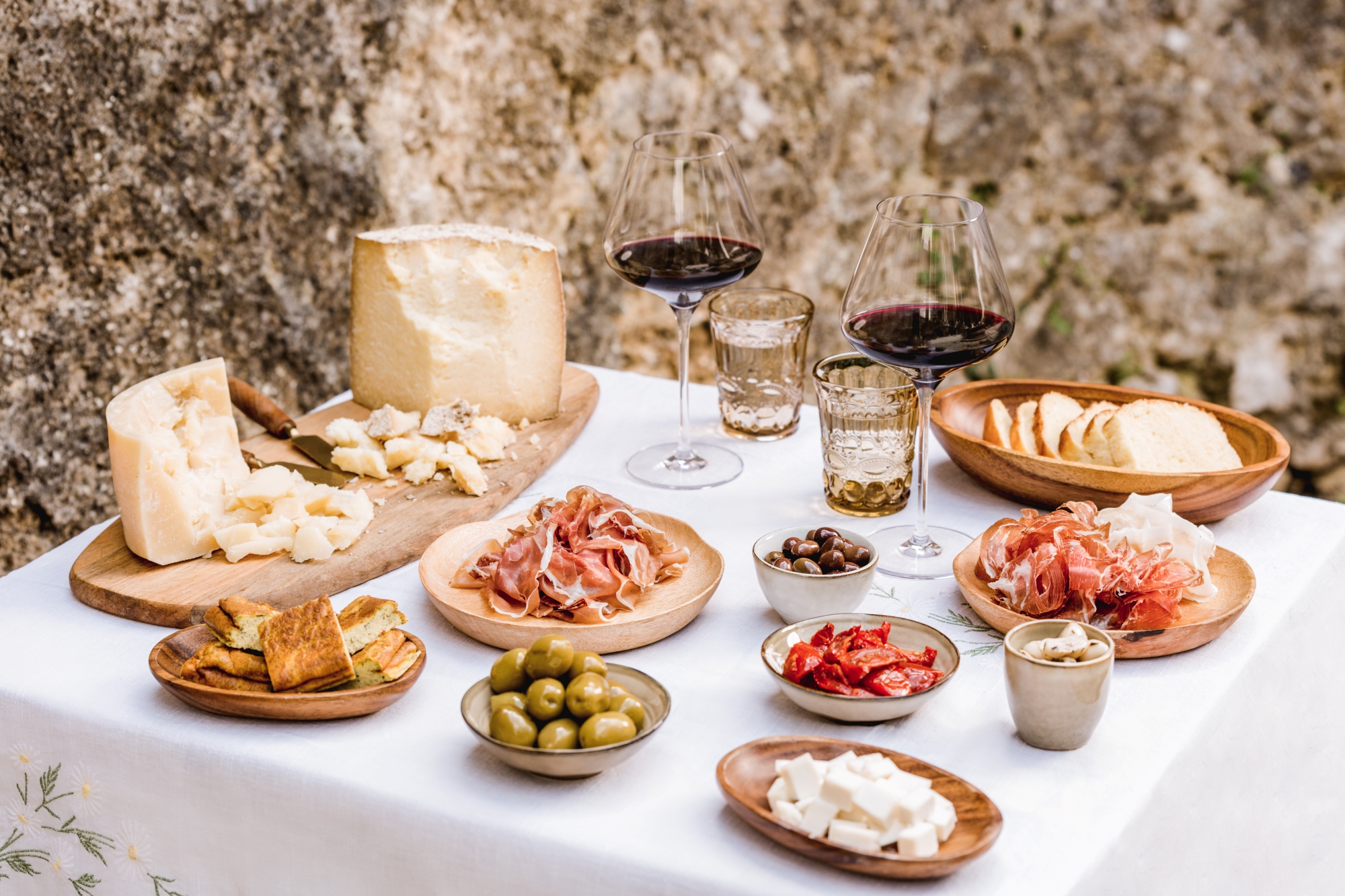
In Štanjel time passes by more slowly. So why not take some time to taste and explore the culinary tradition of the Karst. Local flavours are a special signature of the land that is marked by its stone, bora wind and biodiversity. The people of the Karst are pleased to present their culinary and wine specialities, so a short break should always include some chatting with locals and exploring the culture of the place.
Culinary masterpieces give every event a special touch. It could be a wedding or a business meeting, or even exquisite catering in the castle courtyard, the Ferrari Garden or in one of Štanjel’s picturesque alleys. While enjoying beautiful views of the Vipava Valley and the Karst.
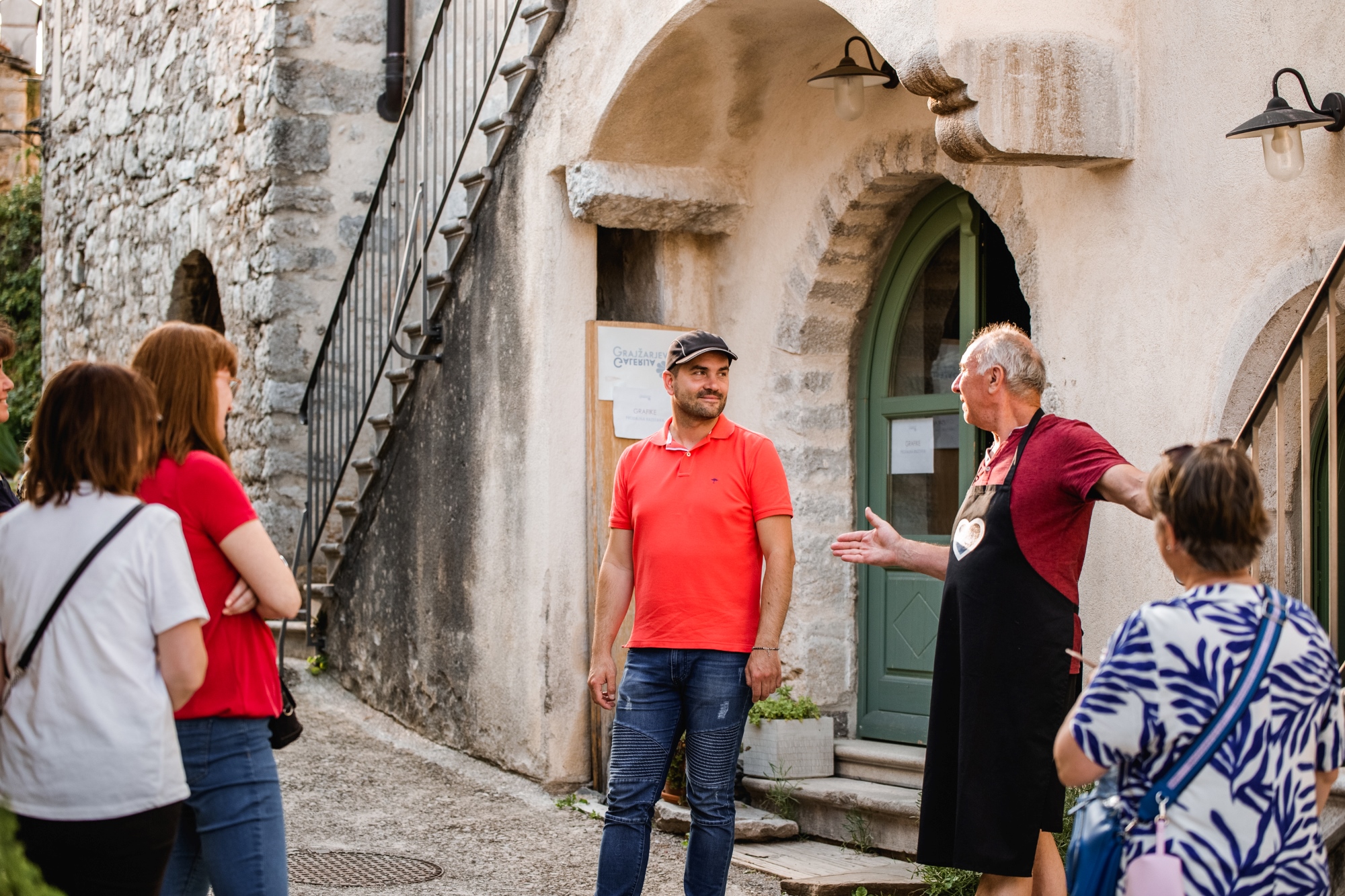
Who could know more about Štanjel than the people whose home it is? Who would be happy to tell you the unwritten stories about life in this ancient village that pass from one generation to another? People who live in Štanjel love visitors. You can feel their genuine hospitality. And you can be boundlessly curious during guided tours, because the local guides know the answers to even the most unusual questions. The openness of the Karst will brighten up your day.
Visit Štanjel
Tours & Experiences
Štanjel Castle
The Ferrari Garden
Welcome to the creative garden of Max Fabiani. One of the most important architects and urban planners of the Austro-Hungarian Empire, Fabiani designed Villa Ferrari and its garden for his nephew from Trieste. He created a self-sufficient estate for work and leisure, for growing food, recycling waste and collecting rainwater. In doing so, he applied all his knowledge and a sustainable vision in which not a single drop of water went to waste.
Weddings
Business meetings
Events
Info
Štanjel is a place of countless unique stories that enrich the experience of this one-of-a-kind medieval settlement. Get to know the architect Maks Fabiani and his works better, discover why flower wreaths hang on the front door of every house in the old village and much more.


