The Ferrari garden in a new light
Štanjel’s cosmopolitan Karst terrace
Even at first glance the Ferrari Garden feels different – orderly yet mysterious. To better understand its aesthetic, practical and social character, visit Natalija’s House, the entry point to the garden. The garden took shape gradually from the 1920s onwards. In its design, adapted perfectly to the terrain, architect Max Fabiani combined Karst traditions with contemporary European trends.
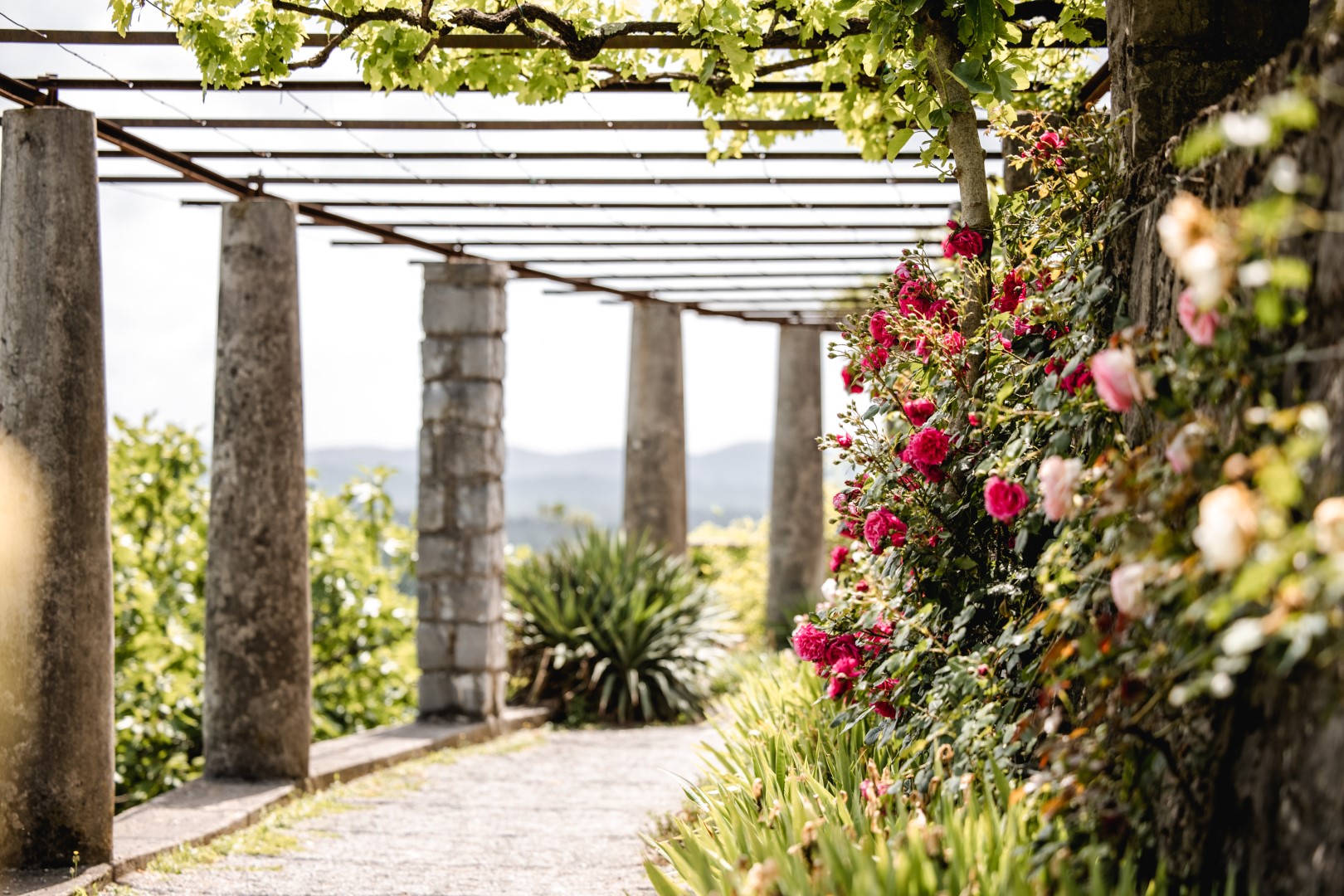
At the heart of the garden are water and an innovative water supply system. This supplied a fully self-sufficient estate with vegetable and flower beds, an orchard, trees and meadows. The Ferrari Garden can be understood as a model for the gardens of the future, for us to cultivate as a community.
AN INNOVATIVE WATER SUPPLY SYSTEM
Max Fabiani came from a large landowning family in Kobdilj, just a short walk from Štanjel. In addition to vineyards, fields, livestock and orchards, the Fabiani family had something always scarce in the Karst – a spring that never dried up, even in summer.
Fabiani recognised early on that water is the foundation of life and community. Karst settlements have always depended on rainwater. The porous surface means that water quickly disappears underground, so people built village wells to catch every drop from the roofs.
For Villa Ferrari and its garden, Fabiani designed a water supply system that was one of the most advanced of its time. It collected rainwater, separating clean water for household use from surface water for irrigation or fertilisation. The entire system of pipes, cisterns and channels worked solely by gravity. When the cisterns were full, the surplus water automatically overflowed into the pool in the garden, which served as an ingenious reservoir. Water circulated, was purified and returned to use. A century ago the system was visionary; today it stands as a model of sustainable design.
Learn more about the garden and the water system at the permanent exhibition in Natalija’s House.


