A visit to Natalija’s House


The story of a house, a community and a garden of creativity
The Ferrari Garden is the realised utopia of Max Fabiani. It is the green living room of the former Villa Ferrari, an open space where vistas unfold and water becomes a mirror. Discover how the architect designed the garden as part of a self-sufficient estate and learn the secret of the unusual pool in the middle of the dry Karst. The entry point to the garden is Natalija’s House, named after Natalija Ščurk, the wife of Fabiani’s nephew, who lived here in the 1920s and 1930s.
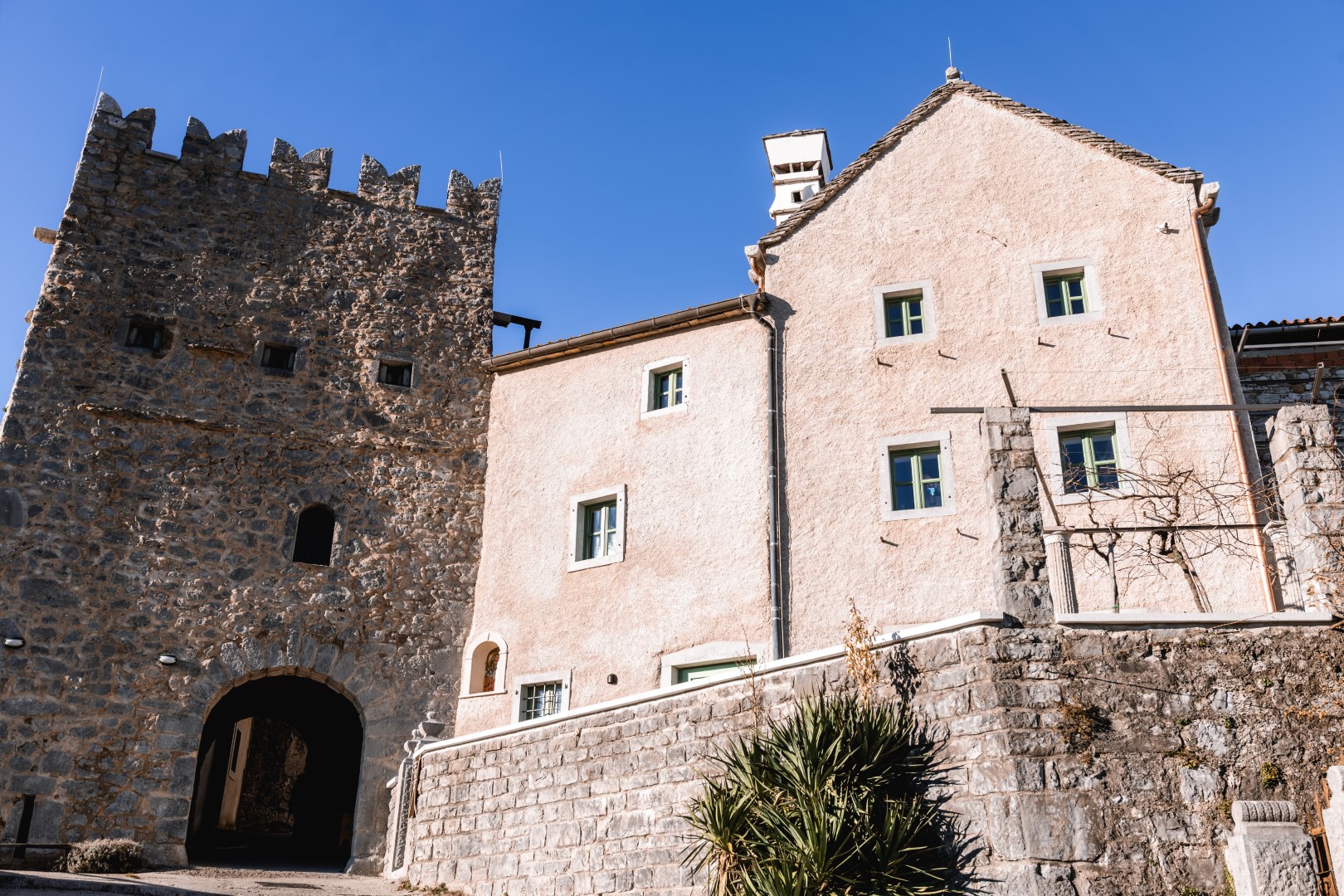
On the ground floor is the Ferrari Garden Visitor Centre. There is also a corner dedicated to Karst specialities, so you can take a taste of the region away with you. The first floor invites you to explore the architect’s story, the blended cultures of interwar Štanjel and the living traditions of the community, such as the weaving of St John’s wreaths. On the second floor you can immerse yourself in Fabiani’s garden of creativity, among his plans and sketches and the paintings adorning all the walls.
PERMANENT EXHIBITION: THE TREE, THE ARCHITECT AND THE GARDEN
See the permanent exhibition on Villa Ferrari and its garden, the work of contemporary creatives from all over Slovenia. On the second floor, the film The Tree, the Architect and the Garden by director Jaša Koceli portrays Max Fabiani as a man of the Karst and a European. Each floor tells its own story. The first offers a glimpse of Štanjel a century ago and today. Most exciting of all is the top floor with its open attic, where you are surrounded on all sides by painted walls on which artist Tomaž Milač has recreated the endless ideas and designs of the first architect in the Austro-Hungarian Empire to hold a doctorate in technical sciences.
WATER BAR
A special feature of the Natalija’s House experience is the blue room with its water bar. Water is at the heart of the design of the Ferrari Garden. Rainwater flows through an ingenious water supply system with channels, pipes and cisterns for the separate use of surface water and cleaner water collected from the roofs of Villa Ferrari. In old Štanjel, drinking water was collected in stone gutters beneath the roofs and stored in wells until the village was connected to the mains water supply in 1991. The water bar is therefore a monument to the beauty and importance of water.
THE GARDEN AS A VIBRATION OF THE SOUL
Natalija’s House is part of the soul of Štanjel and its millennia-old history, a testament to the coexistence of tradition and contemporary creativity. It is a tribute to the modernism of the twentieth century, which came to the Karst not merely as a trend but as a model of human-centred solutions created by the architect, urban planner and humanist Max Fabiani. The Ferrari Garden was Max’s garden of creativity, which will forever inspire the community and its visitors. “Listen to this space and be sensitive to the vibration of the soul”, as Fabiani would have said.
When
SUMMER SCHEDULE
Monday: Closed (except for pre-booked groups)
Tuesday–Friday: 9:00–17:00
Saturday, Sunday and public holidays: 9:00–18:00
WINTER SCHEDULE
Monday–Wednesday: Closed (except for pre-booked groups)
Thursday–Sunday and public holidays: 9:00–16:00
Contact
Natalija’s House Visitor Centre
+386 41 383 986
info@visitstanjel.si


