The entry point is the renovated Natalija’s House, a creative garden for more than 30 contemporary artists and designers – from guardians of Fabiani’s heritage to the spatial practice Sara&Sara and exhibition design by the Nea Culpa collective. In the 1920s and 1930s this house formed part of Villa Ferrari, which Fabiani created from several buildings along the Štanjel’s eastern wall. Today it houses a hub for the local community and a visitor centre with an exhibition on the Ferrari Garden and its architect.

The story of a house, a community and a garden of creativity
The Ferrari Garden is the realised utopia of Max Fabiani. It is the green living room of the former Villa Ferrari, an open space where vistas unfold and water becomes a mirror. Discover how the architect designed the garden as part of a self-sufficient estate and learn the secret of the unusual pool in the middle of the dry Karst. The entry point to the garden is Natalija’s House, named after Natalija Ščurk, the wife of Fabiani’s nephew, who lived here in the 1920s and 1930s.
%%SLIKA_1%%
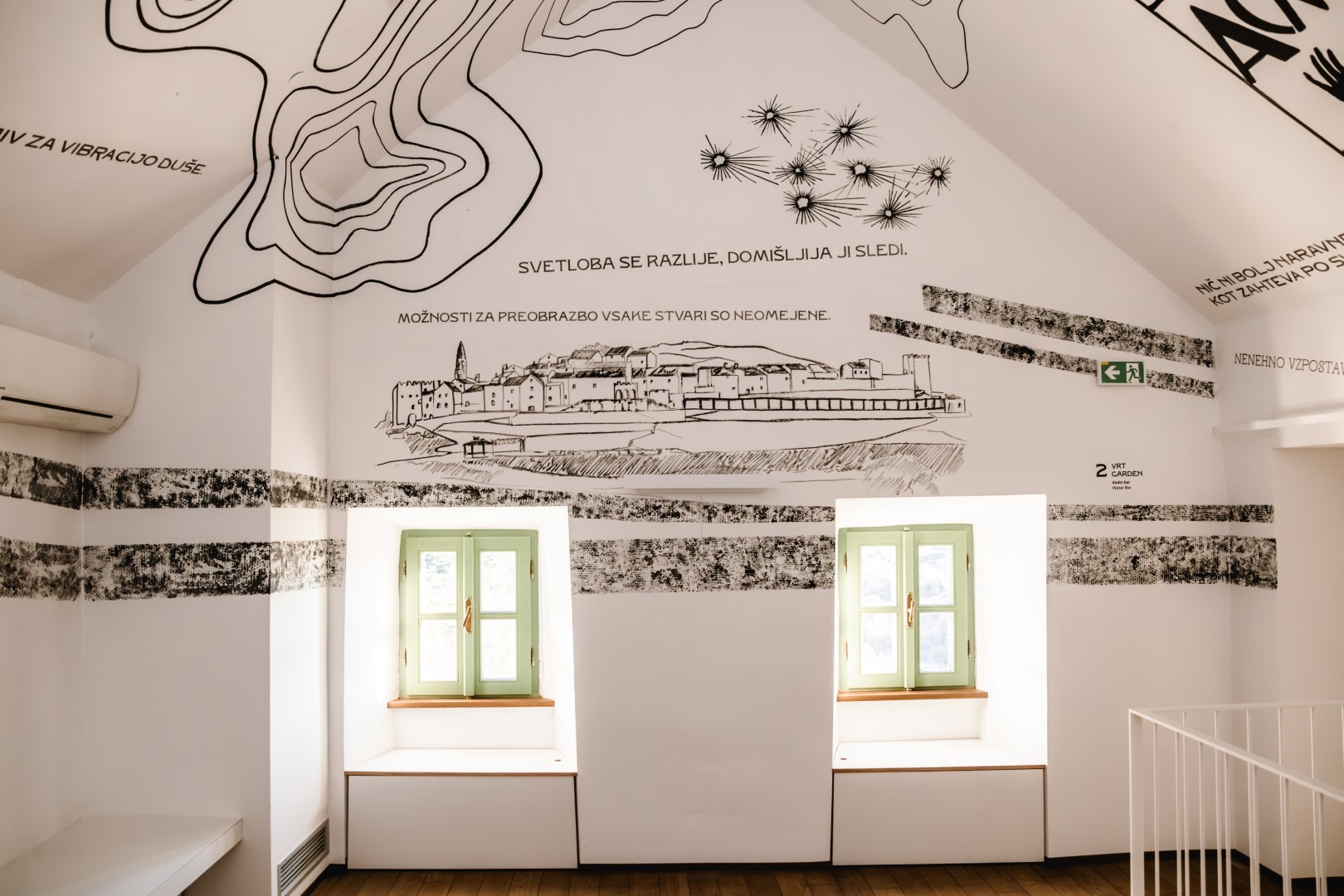
On the ground floor is the Ferrari Garden Visitor Centre. There is also a corner dedicated to Karst specialities, so you can take a taste of the region away with you. The first floor invites you to explore the architect’s story, the blended cultures of interwar Štanjel and the living traditions of the community, such as the weaving of St John’s wreaths. On the second floor you can immerse yourself in Fabiani’s garden of creativity, among his plans and sketches and the paintings adorning all the walls.
PERMANENT EXHIBITION: THE TREE, THE ARCHITECT AND THE GARDEN
See the permanent exhibition on Villa Ferrari and its garden, the work of contemporary creatives from all over Slovenia. On the second floor, the film The Tree, the Architect and the Garden by director Jaša Koceli portrays Max Fabiani as a man of the Karst and a European. Each floor tells its own story. The first offers a glimpse of Štanjel a century ago and today. Most exciting of all is the top floor with its open attic, where you are surrounded on all sides by painted walls on which artist Tomaž Milač has recreated the endless ideas and designs of the first architect in the Austro-Hungarian Empire to hold a doctorate in technical sciences.
WATER BAR
A special feature of the Natalija’s House experience is the blue room with its water bar. Water is at the heart of the design of the Ferrari Garden. Rainwater flows through an ingenious water supply system with channels, pipes and cisterns for the separate use of surface water and cleaner water collected from the roofs of Villa Ferrari. In old Štanjel, drinking water was collected in stone gutters beneath the roofs and stored in wells until the village was connected to the mains water supply in 1991. The water bar is therefore a monument to the beauty and importance of water.
THE GARDEN AS A VIBRATION OF THE SOUL
Natalija’s House is part of the soul of Štanjel and its millennia-old history, a testament to the coexistence of tradition and contemporary creativity. It is a tribute to the modernism of the twentieth century, which came to the Karst not merely as a trend but as a model of human-centred solutions created by the architect, urban planner and humanist Max Fabiani. The Ferrari Garden was Max’s garden of creativity, which will forever inspire the community and its visitors. “Listen to this space and be sensitive to the vibration of the soul”, as Fabiani would have said.
When
SUMMER SCHEDULE
Monday: Closed (except for pre-booked groups)
Tuesday–Friday: 9:00–17:00
Saturday, Sunday and public holidays: 9:00–18:00
WINTER SCHEDULE
Monday–Wednesday: Closed (except for pre-booked groups)
Thursday–Sunday and public holidays: 9:00–16:00
Contact
Natalija’s House Visitor Centre
+386 41 383 986
info@visitstanjel.si
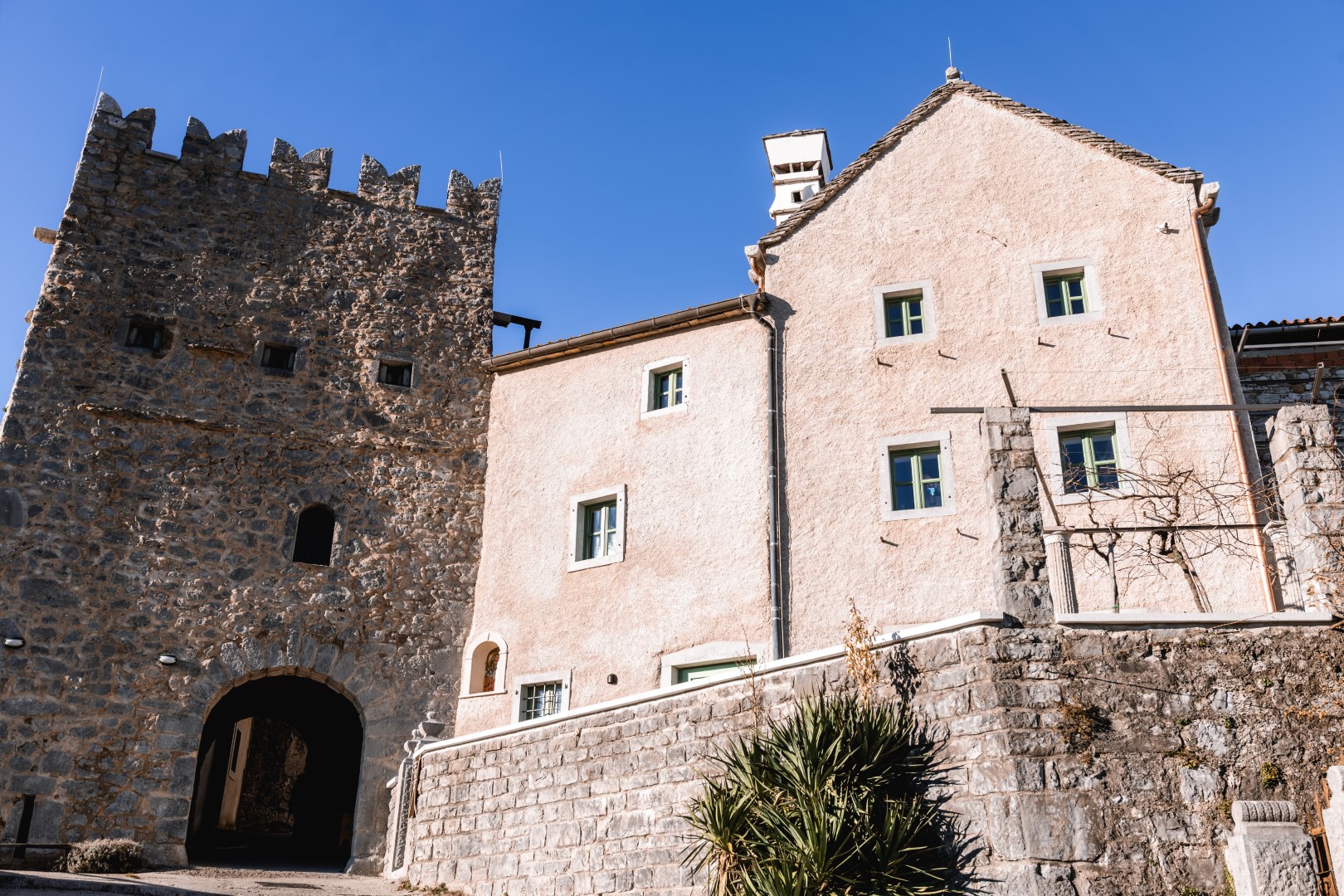
Štanjel’s cosmopolitan Karst terrace
Even at first glance the Ferrari Garden feels different – orderly yet mysterious. To better understand its aesthetic, practical and social character, visit Natalija’s House, the entry point to the garden. The garden took shape gradually from the 1920s onwards. In its design, adapted perfectly to the terrain, architect Max Fabiani combined Karst traditions with contemporary European trends.
%%SLIKA_1%%
At the heart of the garden are water and an innovative water supply system. This supplied a fully self-sufficient estate with vegetable and flower beds, an orchard, trees and meadows. The Ferrari Garden can be understood as a model for the gardens of the future, for us to cultivate as a community.
AN INNOVATIVE WATER SUPPLY SYSTEM
Max Fabiani came from a large landowning family in Kobdilj, just a short walk from Štanjel. In addition to vineyards, fields, livestock and orchards, the Fabiani family had something always scarce in the Karst – a spring that never dried up, even in summer.
Fabiani recognised early on that water is the foundation of life and community. Karst settlements have always depended on rainwater. The porous surface means that water quickly disappears underground, so people built village wells to catch every drop from the roofs.
For Villa Ferrari and its garden, Fabiani designed a water supply system that was one of the most advanced of its time. It collected rainwater, separating clean water for household use from surface water for irrigation or fertilisation. The entire system of pipes, cisterns and channels worked solely by gravity. When the cisterns were full, the surplus water automatically overflowed into the pool in the garden, which served as an ingenious reservoir. Water circulated, was purified and returned to use. A century ago the system was visionary; today it stands as a model of sustainable design.
Learn more about the garden and the water system at the permanent exhibition in Natalija’s House.
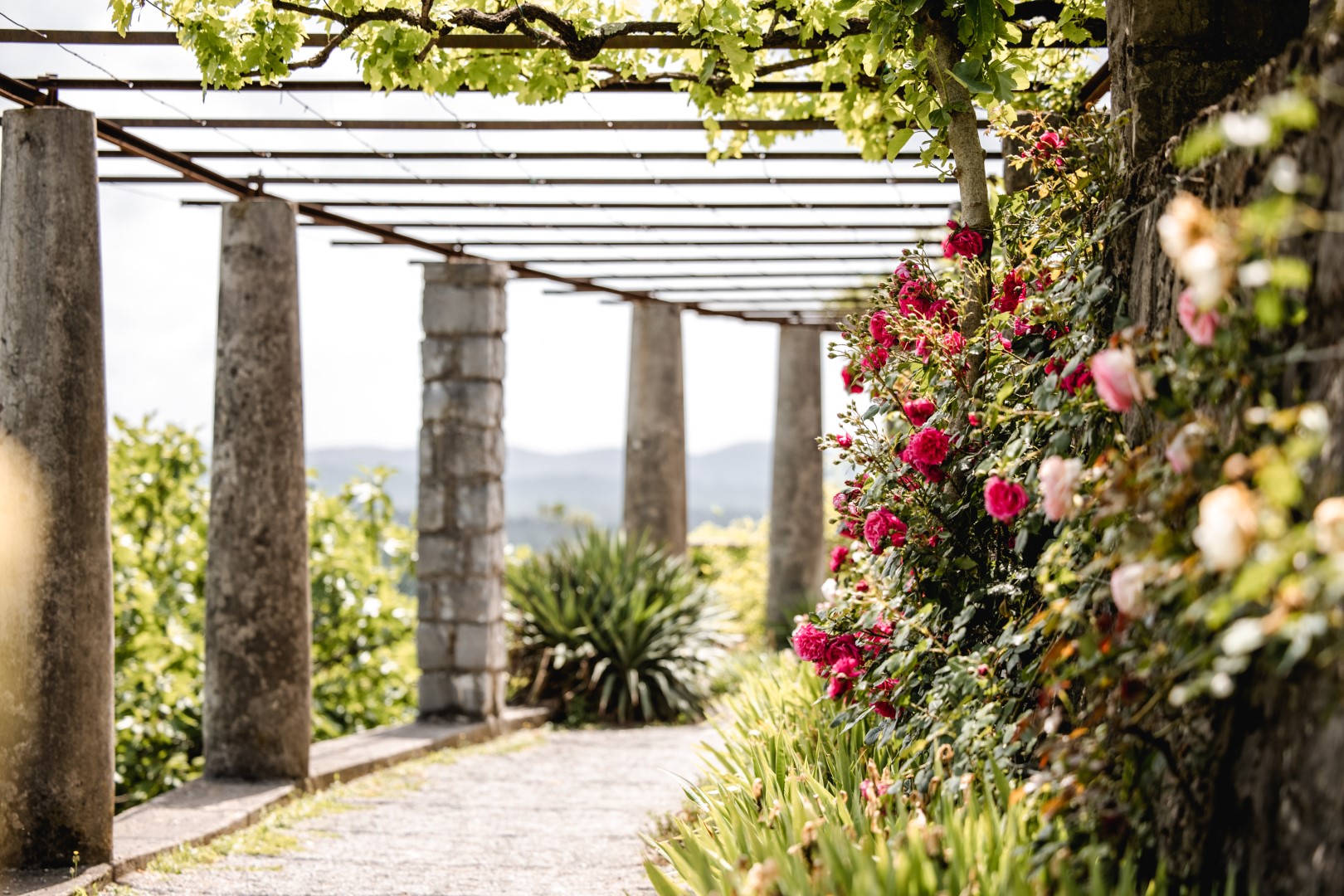
Fabiani’s realised utopia
The permanent exhibition on the first and second floors of Natalija’s House is dedicated to Villa Ferrari and its garden, the work of the architect Max Fabiani. The architect who designed the Urania, the most visited building in Vienna before the First World War, returned to the Karst. It is in Štanjel that we can see at close hand his guiding principles, which form a bridge between tradition and modernism, between European cities and rural Slovenia, between nature and man. An interdisciplinary team of more than 30 creatives has explored and interpreted Fabiani’s garden of ideas.
%%SLIKA_1%%
THE TREE
Max Fabiani’s story begins with a tree. With the green dome of a more than 500-year-old mulberry tree on the Fabiani estate that so captivated his mother when she first came from Trieste to the Karst for convalescence. It was here that she met her future husband, Antonio Fabiani, whose estate she would manage for more than 80 years. They had fourteen children. The tree still grows today in the garden of Villa Fabiani.
THE ARCHITECT
The stories on the first floor and the wall-and-ceiling painting at the top of the house reveal the personal story of Max Fabiani. His career unfolds almost cinematically: from student to respected professor at the Vienna University of Technology, from architect in the great cities of the Empire to urban planner in smaller centres in post-First World War Slovenia. In the end, rather than Vienna, he chose the challenge of post-war reconstruction of the devastated Karst, Goriška and Soča Valley regions. The renovation of Štanjel Castle was one of the first examples in Europe of the transformation of a former elite residence into a centre of everyday life. On the other side of the settlement, he persuaded his nephew from Trieste to buy houses and fragmented plots of land, which he combined to create Villa Ferrari and its garden.
THE GARDEN
The Ferrari Garden is not only Fabiani’s best-known work in Štanjel, it is also his garden of creativity, which continues to offer relaxation to residents and visitors, delight children from the local nursery, energise yoga practitioners and accompany couples into their shared future. At the same time, it is a utopia of the future, demonstrating that it is possible to create a self-sufficient system that outwardly functions as a social space while inwardly integrating all the essential functions of community life, from water collection to food production and waste processing.
At its heart are water, the source of life, the Karst landscape to which the architect adapts, and an eclectic blend of stylistic influences. Through photographs, personal accounts and contemporary footage, you will gain a sense of how the Ferrari Garden is Štanjel’s heartbeat.
Location:
First and second floor of Natalija’s House
Opening hours
SUMMER SCHEDULE
Monday: Closed (except for pre-booked groups)
Tuesday–Friday: 9:00–17:00
Saturday, Sunday and public holidays: 9:00–18:00
WINTER SCHEDULE
Monday–Wednesday: Closed (except for pre-booked groups)
Thursday–Sunday and public holidays: 9:00–16:00
Contact
Natalija’s House Visitor Centre
+386 41 383 986
info@visitstanjel.si
A place of encounters and creativity
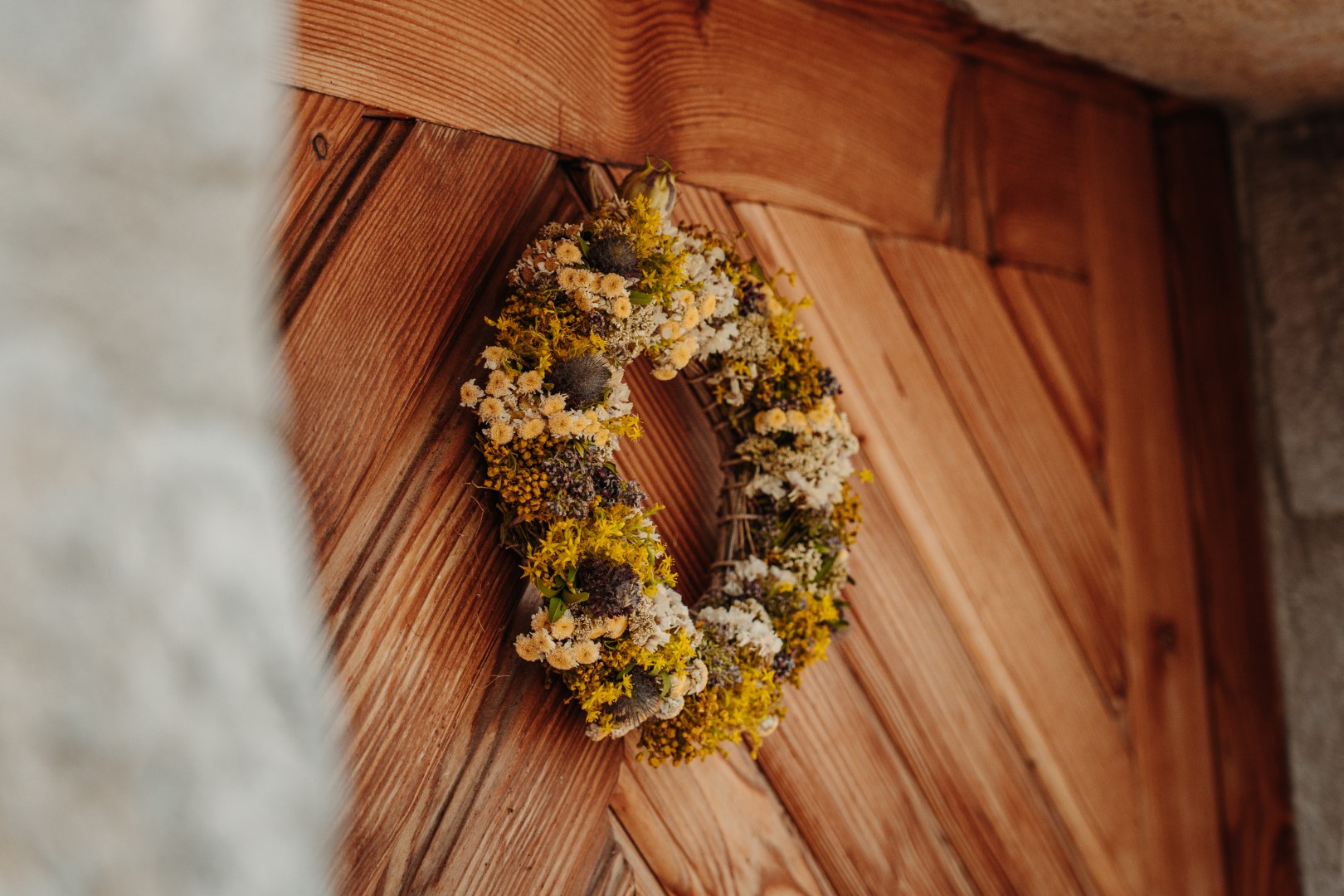
Natalija’s House is not only the entry point for visitors to the Ferrari Garden, it is also a space where the local community gathers. On the ground floor there is a teaching kitchen, where traditional Karst flavours and contemporary gastronomy intertwine through the exchange of knowledge. Workshops, cooking demonstrations and social evenings take place here, giving new life and techniques to old recipes. The multi-purpose hall on the first floor is used for meetings, talks and smaller events. Other users of the space include local associations and artists, among them the Štanjel Wreath Society, which preserves the tradition of weaving St John’s wreaths, inscribed in the Register of Intangible Cultural Heritage of Slovenia.
%%SLIKA_1%%
Visit Štanjel
Tours & Experiences
Štanjel Castle
The Ferrari Garden
Welcome to the creative garden of Max Fabiani. One of the most important architects and urban planners of the Austro-Hungarian Empire, Fabiani designed Villa Ferrari and its garden for his nephew from Trieste. He created a self-sufficient estate for work and leisure, for growing food, recycling waste and collecting rainwater. In doing so, he applied all his knowledge and a sustainable vision in which not a single drop of water went to waste.
Weddings
Business meetings
Events
Info
Štanjel is a place of countless unique stories that enrich the experience of this one-of-a-kind medieval settlement. Get to know the architect Maks Fabiani and his works better, discover why flower wreaths hang on the front door of every house in the old village and much more.


